
News
[Gender & Agriculture] An essential yet overlooked dimension of sustainability
Looking beyond environmental sustainability
When discussing the sustainability of agriculture, the focus is often placed on environmental challenges: soil health, biodiversity, climate resilience or water management. Yet, the sustainability of agri-food systems also relies on a social dimension, including equity, working conditions and gender inclusion. Across the world, women are central actors in agricultural production and agri-food value chains. However, their contribution remains insufficiently recognised and structurally constrained by persistent inequalities in access to land, technology, financing and decision-making positions.
Persistent inequalities across agricultural value chains remain a defining feature of the global agricultural sector. Women’s contributions to agriculture are often visible in labour but invisible in power structures. While women are highly present in production, post-harvest activities and local markets, they remain under-represented in land ownership, technological innovation and leadership roles. Addressing these persistent inequalities is therefore essential not only for gender equity but also for the long-term sustainability and resilience of agricultural value chains.
Women at the heart of global agrifood systems
Women represent a major share of the global agricultural workforce and play a key role at every stage of agri-food value chains.
Some figures illustrate the scale of their contribution:
- Women represent around 40% of the global workforce in agrifood systems (Source: The status of women in agrifood systems)
- In many developing economies, two-thirds of economically active women work in agriculture (Source: Agriculture, trade negotiations and gender)
- Globally, according to the World Economic Forum, women occupied only 23% of leadership roles in agriculture (Source: 2.4 Gender gaps in leadership, by industry and cohort – Global Gender Gap Report 2022 | World Economic Forum)
Despite this central role, women continue to face structural barriers: limited access to productive resources, unequal wages, lower representation in leadership positions and limited participation in strategic decision-making.
A global challenge with local realities
The situation of women in agriculture varies across regions, reflecting differences in cultural norms, economic structures and policy frameworks. Understanding these variations is essential to designing effective and inclusive agricultural transitions.
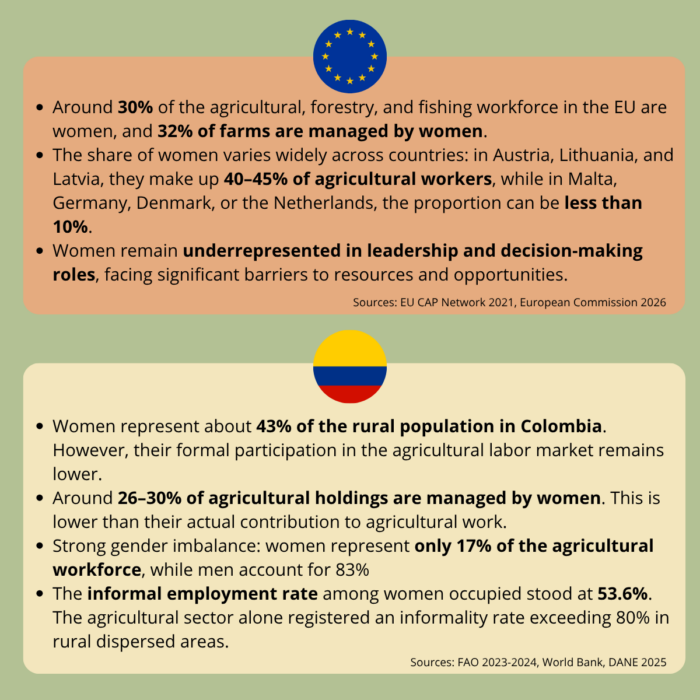
To address these gaps, the European Union is currently implementing several measures:
- The “Women in Farming” platform promotes the exchange of best practices, mentoring, and support for women in agriculture.
- The Common Agricultural Policy (CAP) now provides additional tools to strengthen women’s participation and promote equal opportunities in rural areas. (Commission launches Women in Farming Platform – Agriculture and rural development)
Transforming agricultural systems into sustainable and inclusive models therefore requires not only environmental innovation, but also a rethinking of social relations and power dynamics within agricultural sectors. In this context, innovation projects such as DINOSAR aim to promote a structural transformation of agricultural systems, combining technological innovation with more inclusive governance models. Our next article will give the floor to women working in leadership positions in Colombia’s sugarcane and precision agriculture sectors, sharing their professional journeys and demonstrating how female leadership can inspire the next generation while contributing to a more sustainable agricultural future.
Read more news about DINOSAR
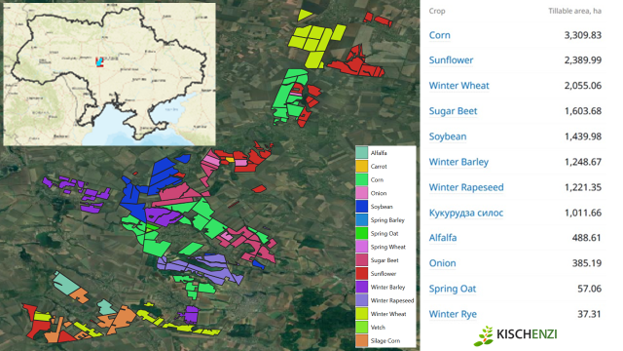
DINOSAR roadmap: Testing our integrated biomass algorithm for key crops in Central Ukraine
DINOSAR has developed an integrated algorithm to estimate biomass. It combines optical and radar satellite-based modeled biomass estimated with an evolutionary model based on field measurements. A Kalman filter decides... View Article
[Gender & Agriculture] Voices of change: Women driving agricultural innovation in Colombia (2/2)
As digital technologies continue to reshape agriculture, women professionals are playing an increasingly important role in bridging innovation with the realities of the field. In Colombia’s sugarcane sector, remote sensing,... View Article
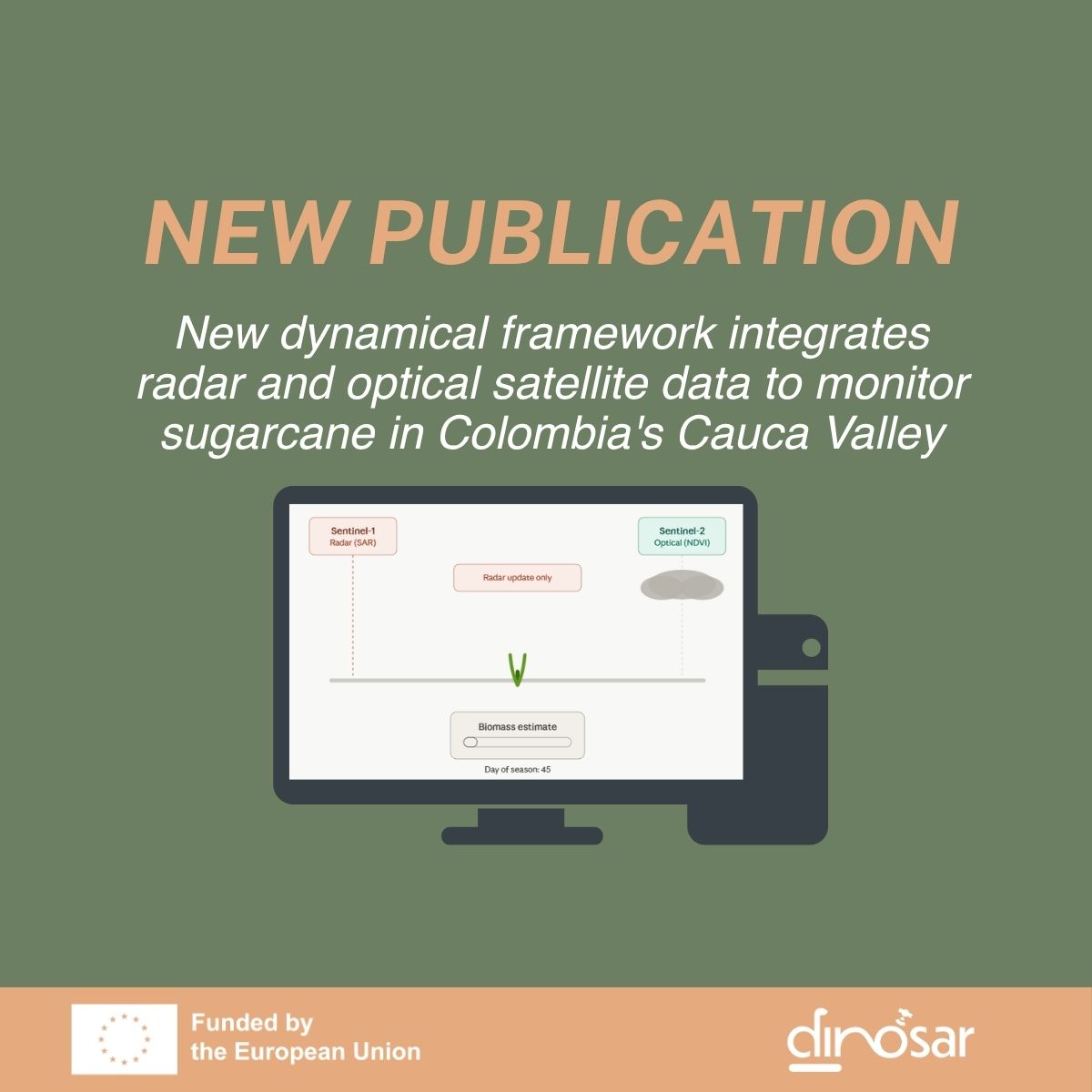
New dynamical framework integrates radar and optical satellite data to monitor sugarcane in Colombia’s Cauca Valley
DINOSAR is proud to announce the publication of its first scientific paper, led by the University of Alicante, with support from eLEAF, SarVision, and AgroAp. Published in the IEEE Journal... View Article