
News
DINOSAR and MINERVA join forces for satellite-based agricultural monitoring
DINOSAR, will build on research carried out as part of the MINERVA project, funded by the Netherlands and coordinated by TU Delft, which aims to establish a network that facilitates and strengthens cooperation between upstream and downstream users to bolster the Dutch position in agricultural vegetation monitoring using radar. For the MINERVA project a site in Ukraine is used to research the use of SAR in quantifying biomass variation, detecting anomalies and phenology. The MINERVA project is a perfect fit to test DINOSAR’s algorithms on other crops. Both projects will have a organise a combined workshop on Thursday December 10 to share knowledge and practical experience.
From sugarcane monitoring to new crop applications
As part of DINOSAR, an integrated algorithm combining optical and Synthetic Aperture Radar (SAR) satellite data has been developed to support continuous crops monitoring in challenging conditions, including the cloudy environment of Colombia’s Cauca Valley. The approach was initially developed and tested for sugarcane and has since been extended to other crops and geographical areas.
In Ukraine, the DINOSAR methodology has been tested on maize, sugar beet, winter wheat and winter barley, with a particular focus on estimating biomass variation within fields. The results are being explored for applications such as Variable Rate Application (VRA) and yield forecasting.
Sharing results and practical experience
In December 2026, eLEAF, now part of TerraMira, will organise, as part of its final event, a workshop on crop monitoring using optical and radar satellite data, bringing together researchers, public authorities and companies active in the fields of agriculture and earth observation.
The event will provide an opportunity to discuss how the combination of optical and radar data can contribute to more reliable crops monitoring and support practical agricultural applications. During the workshop, the two projects will present their findings, providing valuable feedback on the potential of satellite-based crops monitoring to support agricultural decision-making. The workshop will be open to universities, government agencies and companies interested in the use of optical and radar Earth Observation data for agriculture.
The date and further details will be announced soon. Stay tuned!
Read more news about DINOSAR
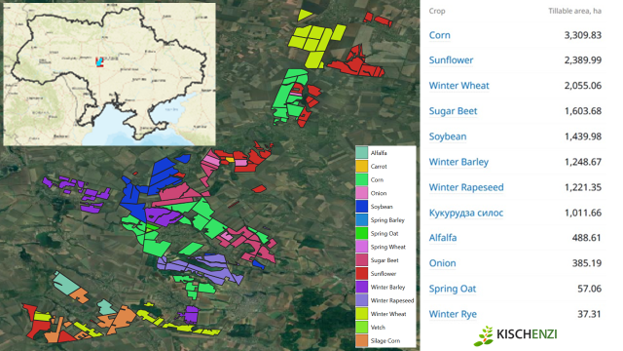
DINOSAR roadmap: Testing our integrated biomass algorithm for key crops in Central Ukraine
DINOSAR has developed an integrated algorithm to estimate biomass. It combines optical and radar satellite-based modeled biomass estimated with an evolutionary model based on field measurements. A Kalman filter decides... View Article
[Gender & Agriculture] Voices of change: Women driving agricultural innovation in Colombia (2/2)
As digital technologies continue to reshape agriculture, women professionals are playing an increasingly important role in bridging innovation with the realities of the field. In Colombia’s sugarcane sector, remote sensing,... View Article
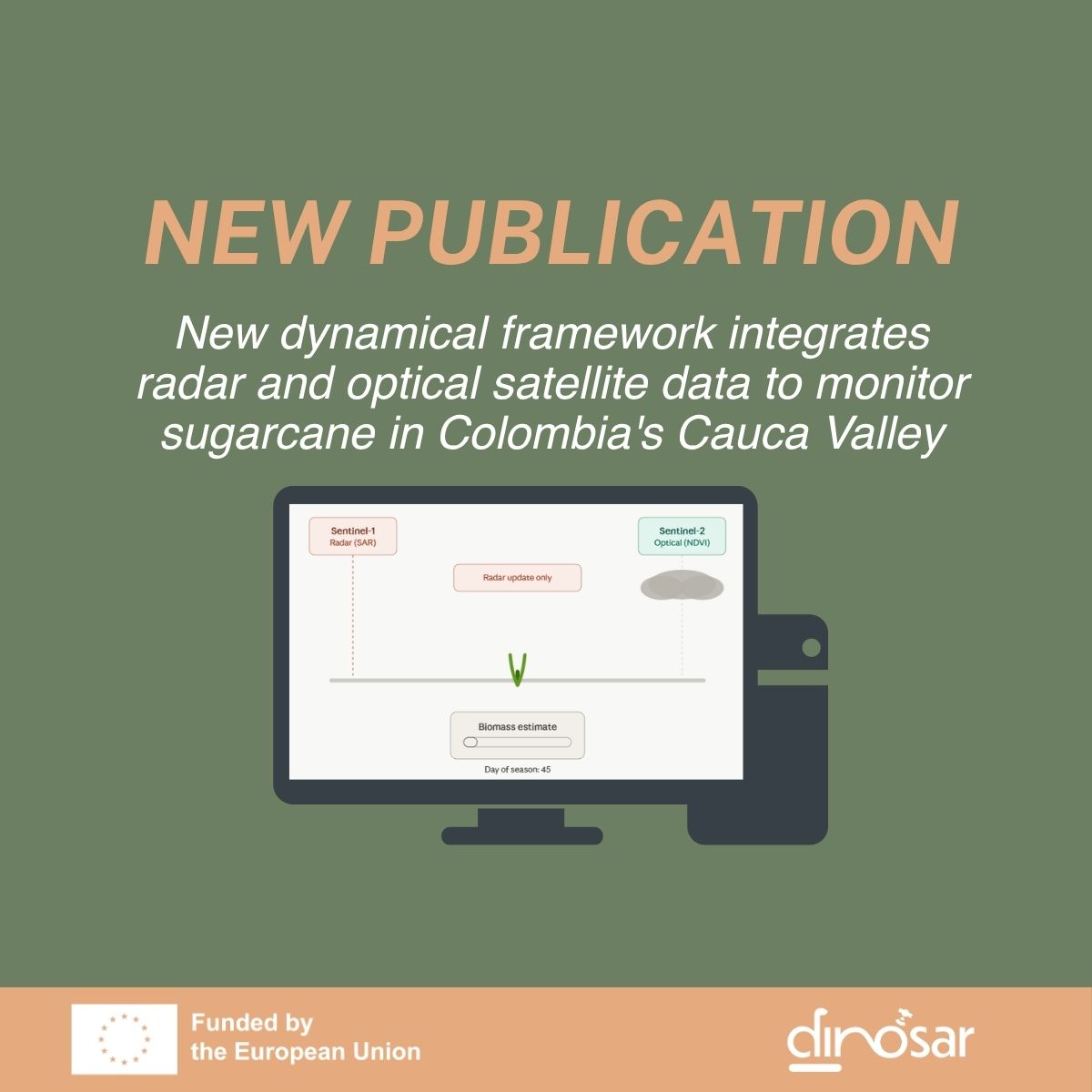
New dynamical framework integrates radar and optical satellite data to monitor sugarcane in Colombia’s Cauca Valley
DINOSAR is proud to announce the publication of its first scientific paper, led by the University of Alicante, with support from eLEAF, SarVision, and AgroAp. Published in the IEEE Journal... View Article