
News
[Gender & Agriculture] Voices of change: Women driving agricultural innovation in Colombia (2/2)
As digital technologies continue to reshape agriculture, women professionals are playing an increasingly important role in bridging innovation with the realities of the field. In Colombia’s sugarcane sector, remote sensing, precision agriculture, and data-driven tools are transforming production systems and supporting more sustainable decision-making processes. Yet beyond the technology itself, these transformations also reveal the importance of human skills: leadership, resilience, collaboration, and the ability to connect innovation with people on the ground. Through the experiences of women working directly in agricultural technology and precision farming, this second edition highlights both the opportunities and the challenges linked to the adoption of new tools in the sector.
DINOSAR is proud to share the perspectives of two more inspiring women from the Cauca Valley whose work demonstrates that innovation in agriculture is not only about technology, but also about trust, inclusion, and long-term sustainability. Check our first part of interviews!
Technology alone is not enough
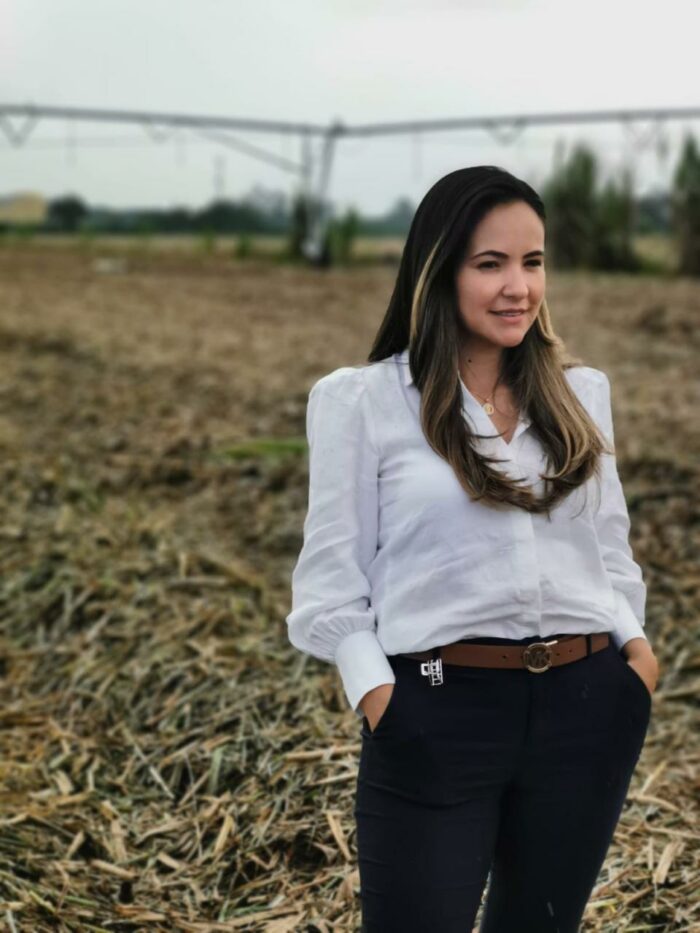
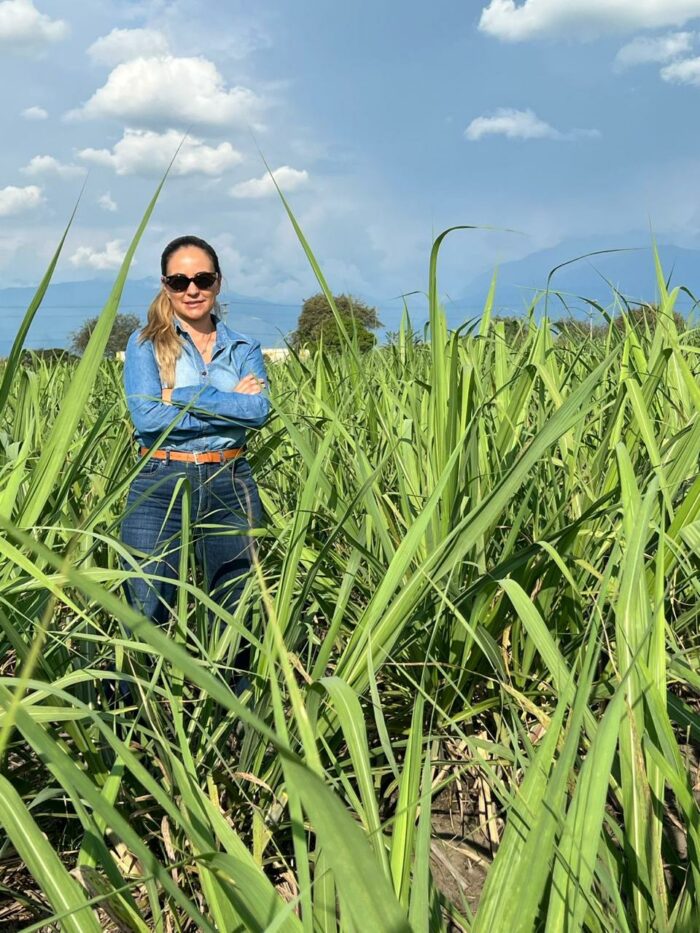
Catalina Delgado has been working for six years at Ingenio Mayagüez, a multilatina company specialized in sugarcane, sugar, bioethanol, energy, and sweetener production. She leads the implementation, monitoring, and optimization of digital tools that help field operations generate value from data and improve decision-making processes. Her work focuses on enhancing working conditions for field teams while driving higher standards of quality, productivity, and profitability.
How do you view the potential for adopting remote sensing technologies in the sugarcane industry?
Undoubtedly, and from my perspective, in the case of Colombia, the sugarcane industry is one of the most technologically advanced agricultural sectors. It continues to search for and/or develop its own tools on a daily basis to improve our production systems, help us become more efficient, and, above all, especially in recent years, maintain or enhance our sustainability principles.
How can women professionals contribute to the effective use and advancement of these tools within the sector?
You always have to believe in yourself, in what you do, and in the tools you develop or implement, and others will surely come to believe in the technology as well. Resistance to change is always present, but perseverance, demonstrating results, and knowing how to reach the field staff—who are the ones who interact with and use the technology—is essential.
What has your experience been like as a woman working in agricultural technology?
From my perspective, it’s been wonderful; I never felt isolated or particularly undervalued because of my gender. on the contrary, I feel that I was supported by many people along my professional journey who helped me grow, who gave me the strength to believe in myself, and who today are essential pillars of support for me to continue contributing to a sector in which, although men predominate, when you earn your place as a woman, they respect you, believe in you, help you, and above all, look out for you.
Implementing technology is not an easy path because we humans always resist change, but when your strength and passion are stronger than your fears, it can be achieved even in a sector like agriculture.
What aspect of your work are you most proud of?
One of the things I’m most proud of is managing to balance my different roles as a leader, mother, wife, and friend, It hasn’t been an easy journey because I worked very hard in the early years of my career and felt like I wasn’t there for my son at many moments, but looking back, I think it was worth it, that it was very rewarding, and that today I’m reaping the rewards of those sacrifices. It has allowed me to understand that professional success must also be accompanied by personal and family well-being.
Professionally, I am filled with pride to have built teams that believe in innovation, dare to propose new ideas, and understand that there are always opportunities to improve and transform processes. Seeing how many of the people I have worked with have grown professionally—but above all as human beings—is one of the greatest satisfactions this journey has given me.
Beyond technical or production results, I am proud to feel that we have built teams that contribute value to society and organizations through commitment, passion, and human qualities.
What skills do you consider most important for working with remote sensing applied to agriculture?
In my role as a leader of these processes, I believe that personal skills will always be the most important, because they are what truly enable us to leverage and demonstrate our technical abilities. Being an inquisitive, curious person with a constant desire to learn, strong interpersonal and teamwork skills, and a service-oriented attitude is essential in these types of fields. I also consider it very important to always act with integrity, striking a balance between what is technically feasible and what is ethically correct.
From a technical standpoint, it is now essential to develop skills in data management and analysis, programming languages, automation, and artificial intelligence, as agriculture and remote sensing are increasingly moving toward analytical and predictive models.
However, one thing that must never be lost is the connection to the field. Technology alone is not enough; it is necessary to understand how crops actually behave, interpret agronomic conditions, and validate in the field what we see on a screen or in a satellite image. That is where technology is truly integrated with agricultural decision-making.
Historical data can become a tool for progress
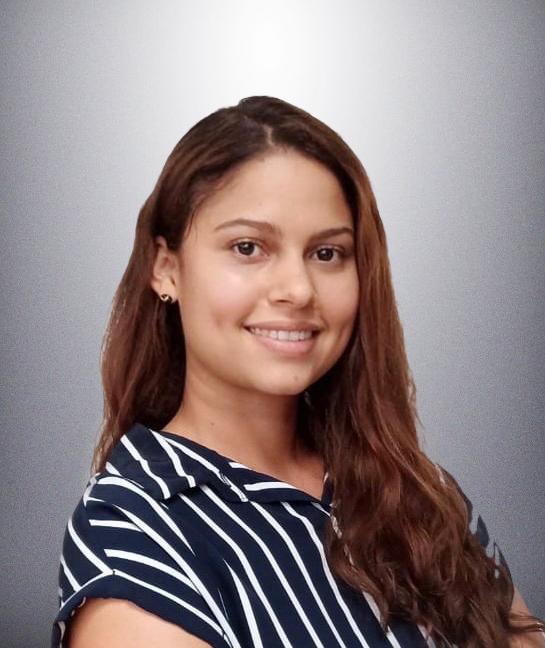
Juliana Lozano works at CI AGROAP SAS, one of DINOSAR’s partners, specialised in agronomic consulting and precision agriculture services; it focuses on combining data analysis, cutting-edge technologies, and agronomic expertise to improve decision-making in the agricultural sector.
Her role involves processing and analyzing agricultural data while supporting producers in their transition toward precision agriculture. She helps facilitate the adoption of technological tools that optimize productivity and enhance decision-making processes in agricultural operations.
How do you view the potential for adopting remote sensing technologies in the sugarcane industry?
I believe that the adoption of remote sensing technologies in the sector has been gradual, driven primarily by the need to obtain real-time crop data as the crops develop. However, the pace of implementation has been limited by the complexity of interpreting the information and by the lack of time available to growers to integrate these tasks into their daily management.
How can women professionals contribute to the effective use and advancement of these tools within the sector?
We can contribute our proven ability to integrate and organize processes that ensure the adoption of new technologies is seamless and well-structured. Through planning that looks beyond day-to-day operations, we are able to incorporate these tools into daily management in a way that complements, rather than disrupts, existing operational schedules.
What aspect of your work are you most proud of?
What makes me most proud is seeing how the analysis of historical data becomes a tool for progress for farmers. It motivates me to know that my work provides them with the clarity they need to improve their production systems, striking a balance between farm profitability and the preservation of natural resources.
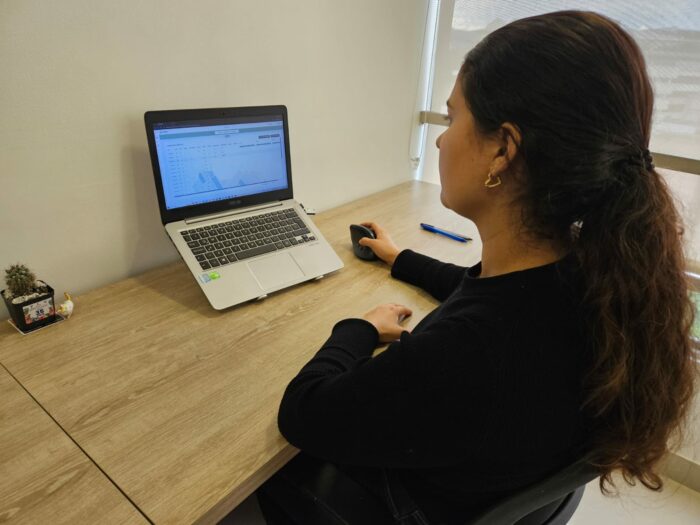
What has your experience been like as a woman working in agricultural technology?
My experience in agricultural technology has been extremely rewarding. I have been fortunate to have the support and recognition of my colleagues and supervisors, which has allowed me to build relationships based on trust and empathy. Thanks to this synergy, we have been able to work together toward common goals, successfully achieving the objectives of each project.
What has your experience been like as a woman working in agricultural technology?
I believe that meticulous observation and technological resilience are key. Given the complexity of geospatial data and the rapid evolution of sensors and algorithms, a professional in this field must be thorough in their analysis and adaptable to the constant innovation in the sector.
Check our mini-series dedicated to the Gender and Agriculture News : Dinosar!
Read more news about DINOSAR
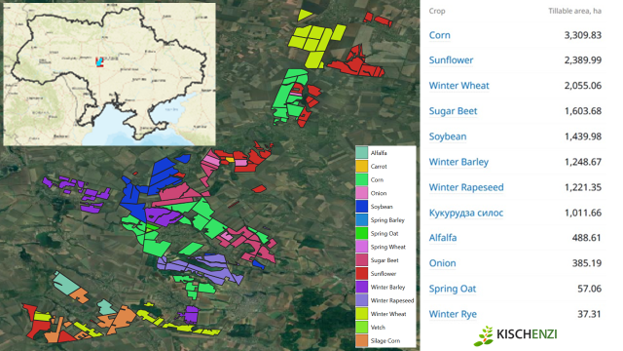
DINOSAR roadmap: Testing our integrated biomass algorithm for key crops in Central Ukraine
DINOSAR has developed an integrated algorithm to estimate biomass. It combines optical and radar satellite-based modeled biomass estimated with an evolutionary model based on field measurements. A Kalman filter decides... View Article
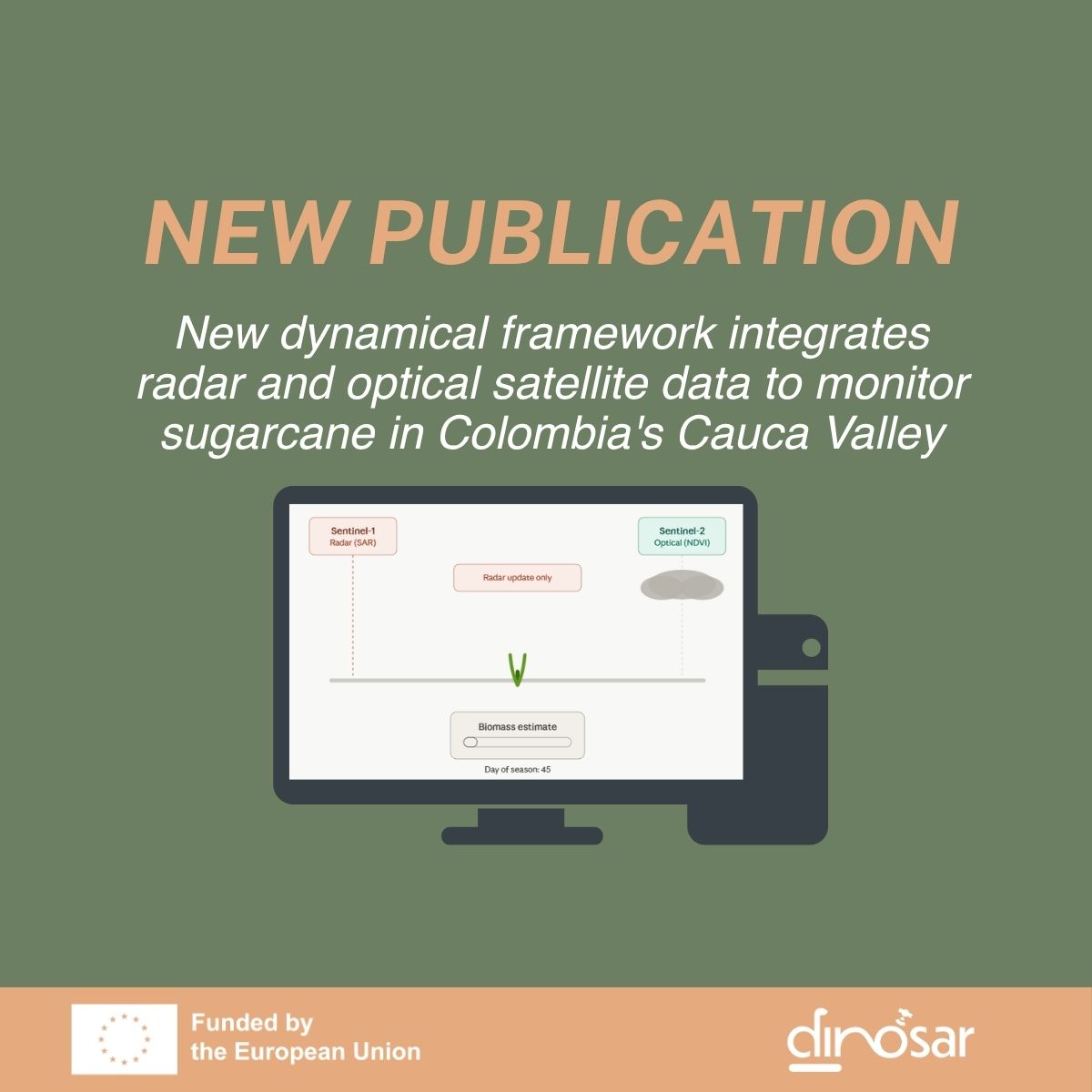
New dynamical framework integrates radar and optical satellite data to monitor sugarcane in Colombia’s Cauca Valley
DINOSAR is proud to announce the publication of its first scientific paper, led by the University of Alicante, with support from eLEAF, SarVision, and AgroAp. Published in the IEEE Journal... View Article
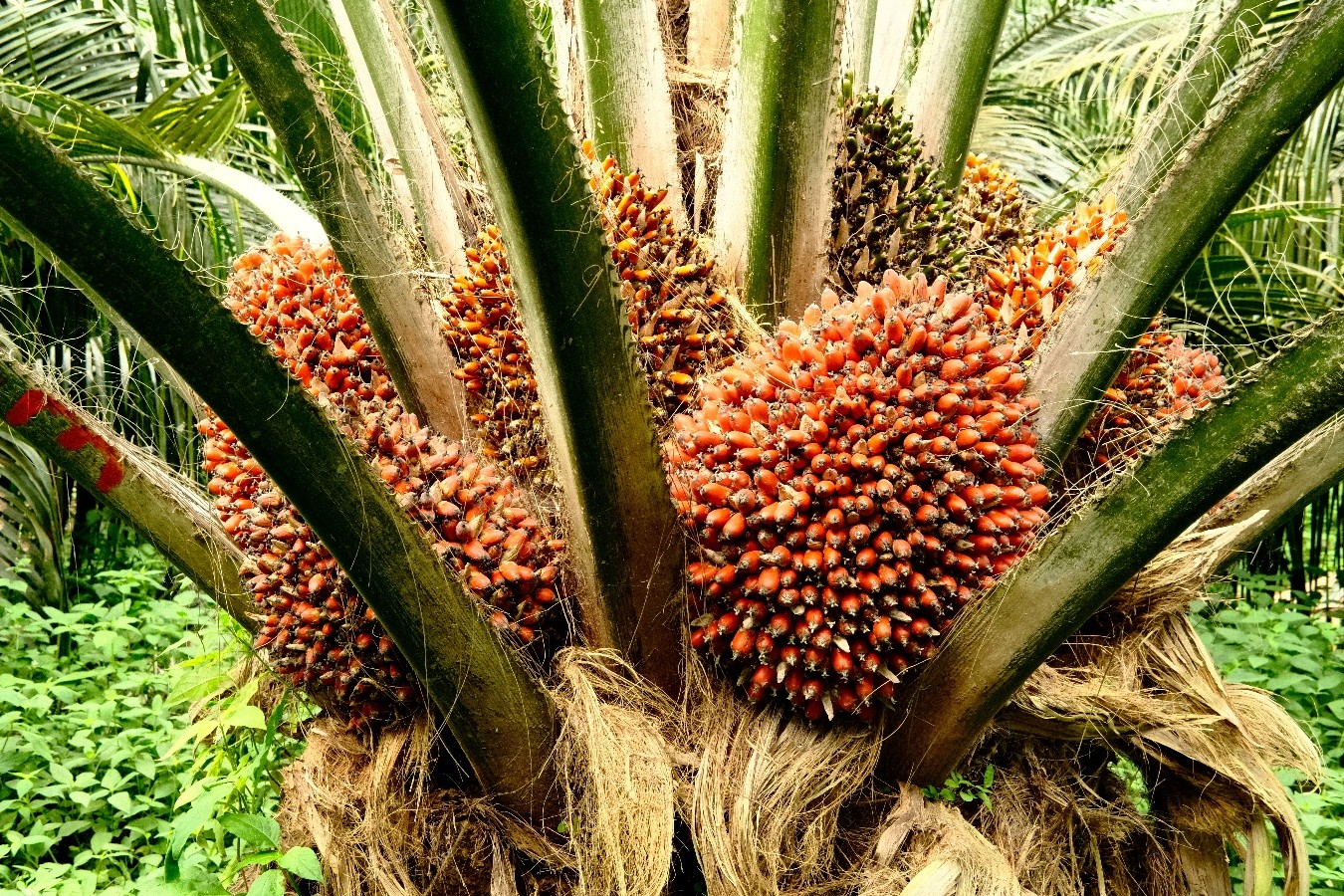
DINOSAR roadmap: Oil palm in Colombia, moving from visual assessment to objective crop monitoring
One of the objectives of the DINOSAR project is to develop a generic methodology that enables research findings to be extended to other crops and geographical areas, whilst establishing a... View Article