
News
DINOSAR roadmap: Oil palm in Colombia, moving from visual assessment to objective crop monitoring
One of the objectives of the DINOSAR project is to develop a generic methodology that enables research findings to be extended to other crops and geographical areas, whilst establishing a roadmap for product development. Unlike conventional approaches, which rely heavily on large volumes of historical data — often unavailable in many regions — the project proposes a solution based on physical models, which is more robust, reproducible and quicker to implement. The in-depth analysis of sugarcane within the DINOSAR project will identify both crop-specific observables and crop-independent variables, which are essential for generalising the methodology. In this context, DINOSAR aims to establish a protocol for application to other crops and geographical areas by evaluating the crop-independent and crop-specific components of the methodology, identifying the limitations and opportunities of phenology and anomaly detection algorithms, and assessing their applicability to ten major crops. More broadly, the work carried out will be essential for the operational plan, providing a detailed technical roadmap describing how DINOSAR algorithms can be deployed for other crops.
Palm oil in Colombia
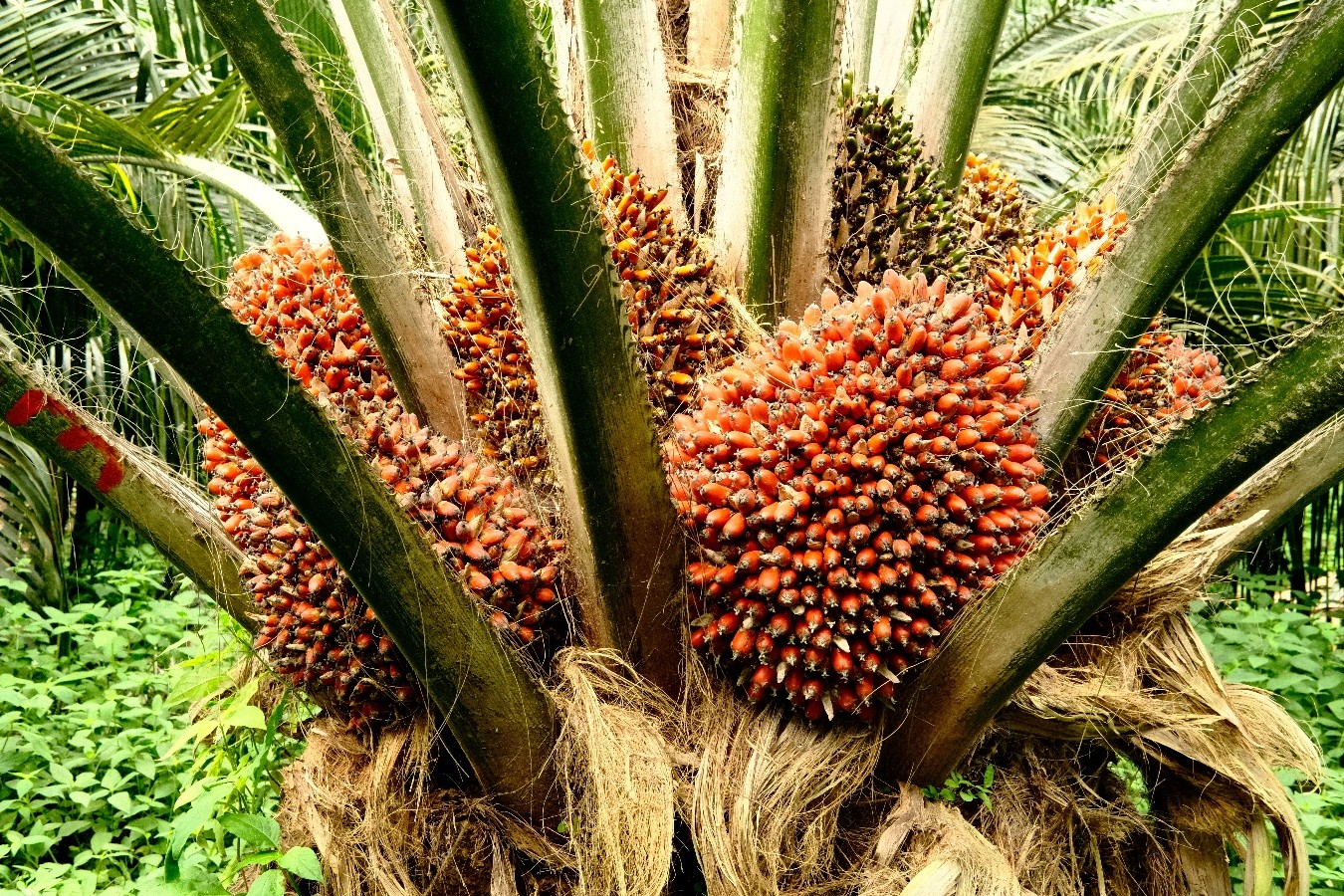
Oil palm is one of Colombia’s most important agricultural crops, with nearly 600,000 hectares planted and a major contribution to rural development, agroindustry, and employment. In the country, Elaeis guineensis and interspecific hybrids can achieve yields above 25 t/ha of fresh fruit bunches (FFB) under proper agronomic management. However, reaching that yield potential remains a major technical challenge. A large share of Colombian oil palm is grown on acid soils, often with low cation exchange capacity, conditions that restrict nutrient availability and reduce fertilizer efficiency. In many cases, fertilization decisions still rely mainly on foliar analysis, nutrient removal targets, and field inspection, while soil constraints do not always receive the same level of attention in the recommendation process. This creates a practical problem for agronomists and plantation managers: even when fertilization, soil amendments, or biostimulant programs are implemented, their effect on productivity is not immediate. In oil palm, the impact of these interventions may become visible only up to two years later. That makes agronomic evaluation slow, complex, and often insufficient for timely decision-making.
This is where remote sensing can add real value. In particular, Net Primary Production (NPP) provides an objective way to track how much carbon the crop is accumulating as biomass, typically expressed in grams of carbon per square meter per day. Unlike traditional vegetation indices, which are dimensionless and can become saturated in mature crops, NPP offers a more robust biophysical signal for monitoring growth dynamics. This is especially relevant in adult oil palm fields, where canopy closure and leaf overlap reduce the sensitivity of conventional vegetation indices. Under these conditions, NPP-based approaches can detect changes in biomass accumulation that are often difficult to identify through routine field observations alone.
The WAPOR platform
The FAO WaPOR platform provides this type of information and opens an important opportunity for agronomic monitoring. By converting NPP into biomass per hectare, and then using that information to infer potential FFB production, it becomes possible to compare treatments, evaluate management practices, and identify which agronomic decisions are driving stronger biomass accumulation, the physiological basis of future yield.
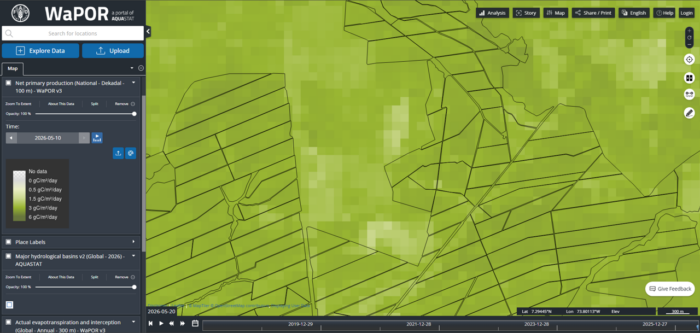
One of the main challenges in oil palm cultivation is the ability to quantify crop growth through remote sensing, since vegetation assessment is commonly based on dimensionless vegetation indices. WaPOR enables a quantitative approximation to understand how biomass evolves in terms of gC/m²/day, which helps validate how environmental or nutritional factors may influence crop development expressed as biomass.
Preliminary analyses using this approach have shown agreement levels close to 87% when estimated biomass is related to observed FFB production. This is a very encouraging result, particularly because the methodology has not yet been fully calibrated specifically for oil palm conditions. In practical terms, this means the approach already shows real potential as a decision-support tool for modern agronomy. It does not replace field inspection, soil analysis, or foliar diagnosis. But it does add a new layer of objective, measurable, and scalable information that helps interpret crop response over time with greater confidence. In addition, the training activities promoted by FAO in Colombia since 2023 have shown the broader value of WaPOR for monitoring perennial crops. Its relevance goes beyond oil palm. It also creates opportunities for other cropping systems where tracking growth and management response is critical for improving productivity.
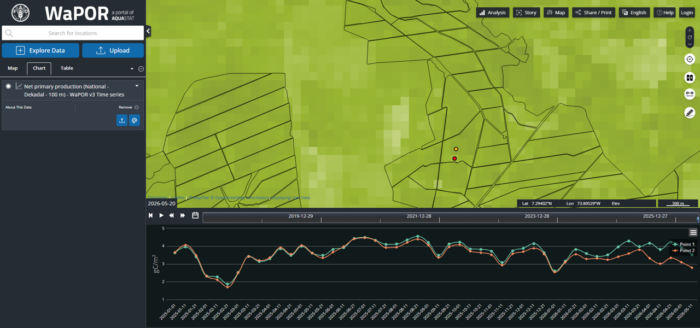
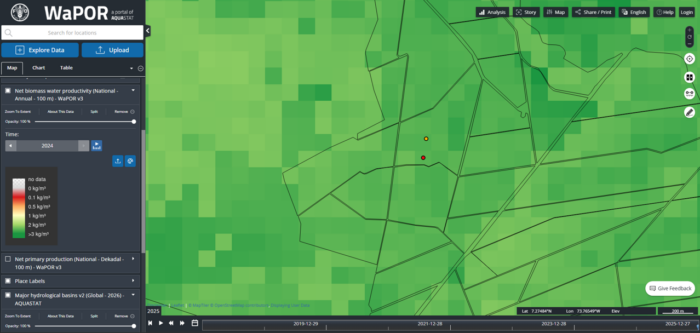
The analysis of historical data at observation points defined by the agronomist becomes a powerful tool for validating treatments and field management practices. Even with the limitations caused by cloud cover in oil palm-growing regions, the available data can still support valuable inferences. Furthermore, estimating water-use efficiency for biomass production becomes a strategic indicator for monitoring and improving crop management under increasingly sustainable environmental guidelines. It contributes to greater objectivity and supports more robust analytical decision-making.
DINOSAR algorithm
The DINOSAR project could generate even greater impact by integrating not only optical sensor data, but also radar sources, enabling more continuous monitoring in cloudy regions, a very common condition in many oil palm-growing areas of Colombia.
In a crop where the effects of management can take years to become fully visible, the ability to measure earlier and decide better is not just a technical advantage. It is a strategic necessity.
Read more news about DINOSAR
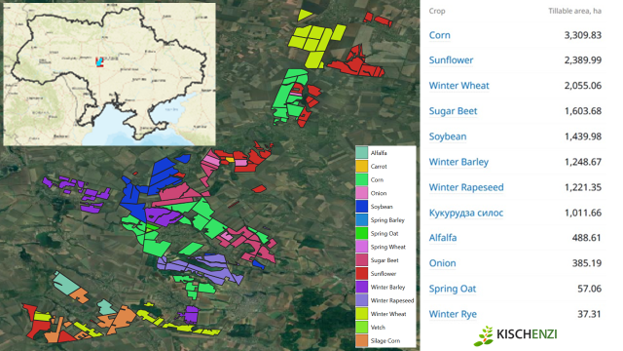
DINOSAR roadmap: Testing our integrated biomass algorithm for key crops in Central Ukraine
DINOSAR has developed an integrated algorithm to estimate biomass. It combines optical and radar satellite-based modeled biomass estimated with an evolutionary model based on field measurements. A Kalman filter decides... View Article
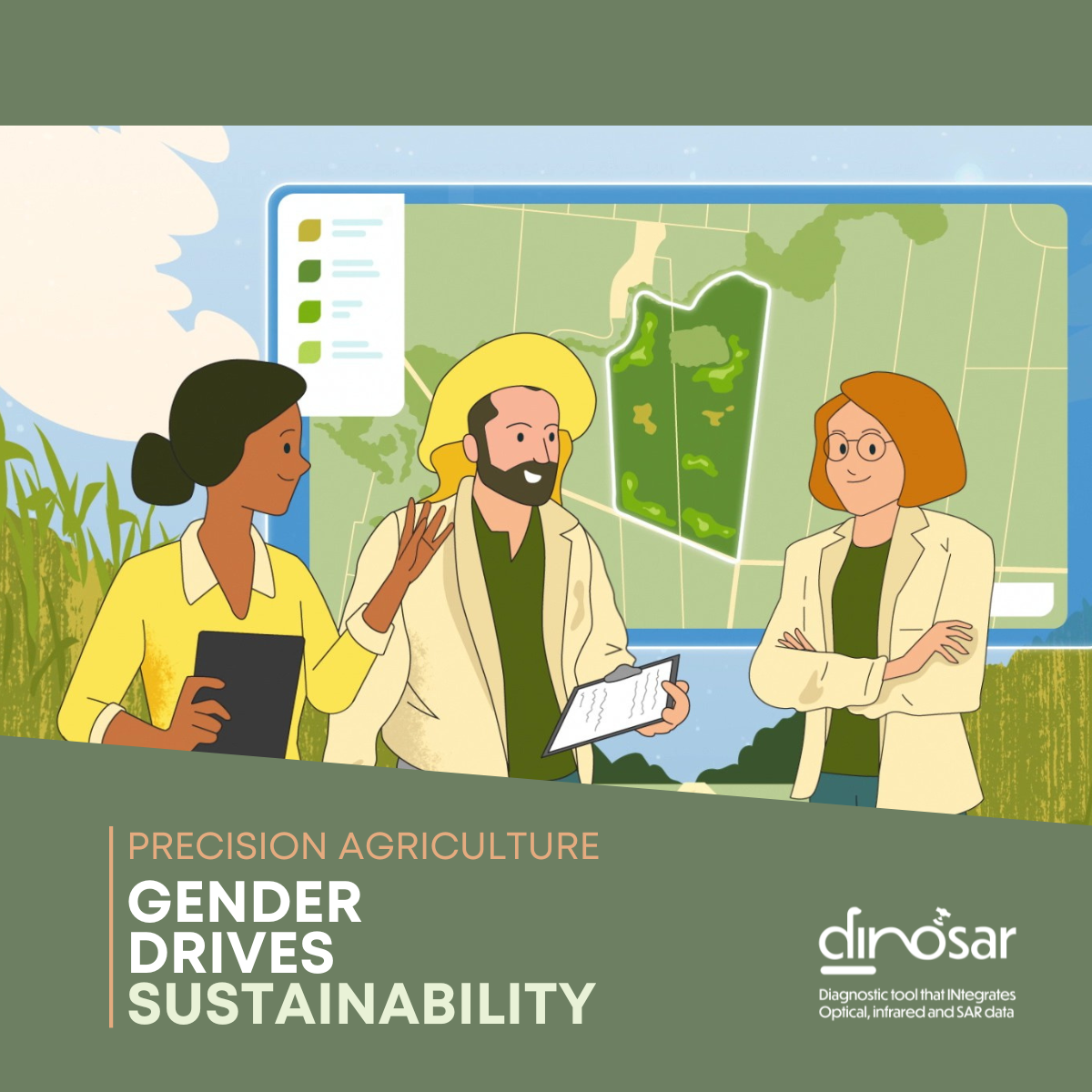
[Gender & Agriculture] Voices of change: Women driving agricultural innovation in Colombia (2/2)
As digital technologies continue to reshape agriculture, women professionals are playing an increasingly important role in bridging innovation with the realities of the field. In Colombia’s sugarcane sector, remote sensing,... View Article
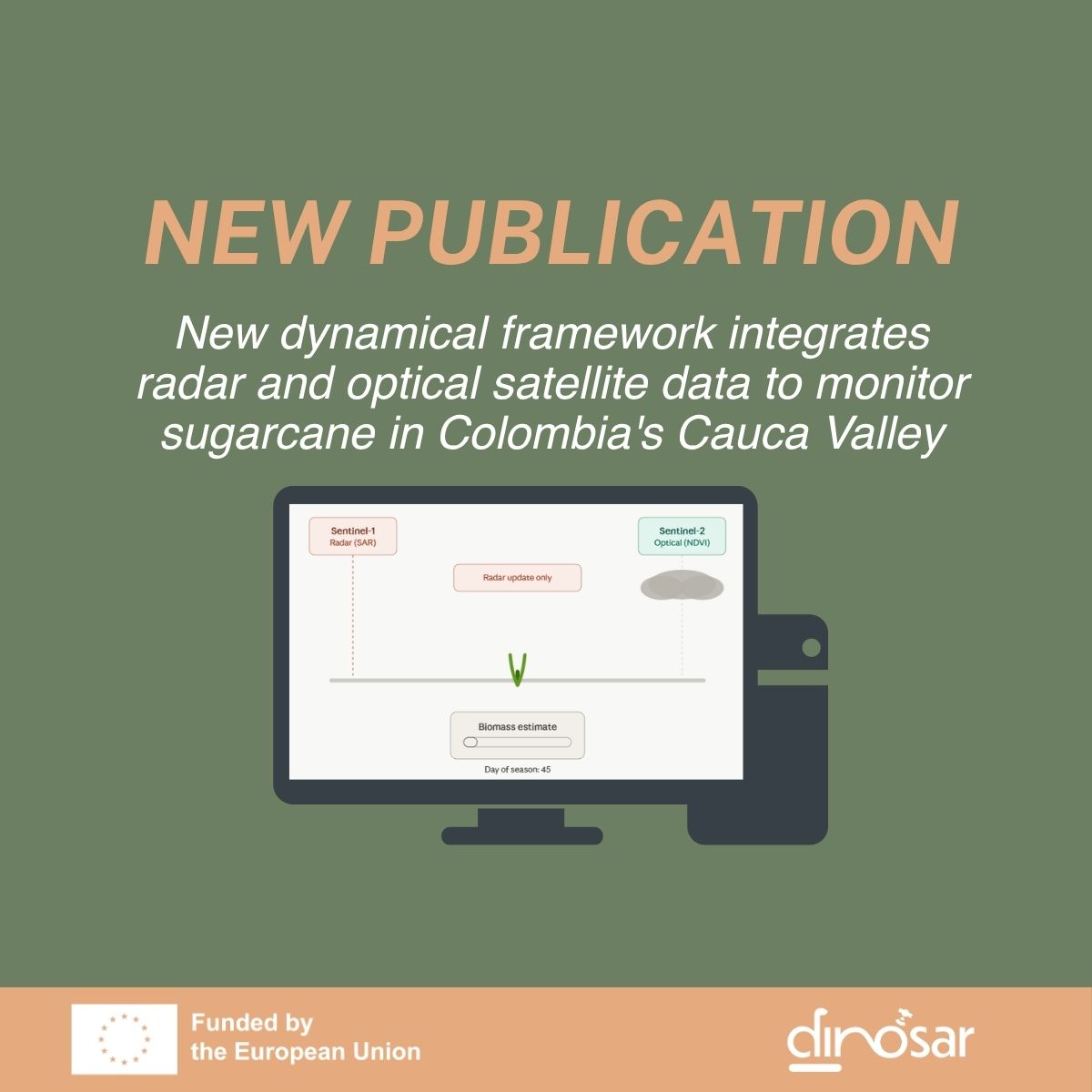
New dynamical framework integrates radar and optical satellite data to monitor sugarcane in Colombia’s Cauca Valley
DINOSAR is proud to announce the publication of its first scientific paper, led by the University of Alicante, with support from eLEAF, SarVision, and AgroAp. Published in the IEEE Journal... View Article