
News
DINOSAR roadmap: Testing our integrated biomass algorithm for key crops in Central Ukraine
DINOSAR has developed an integrated algorithm to estimate biomass. It combines optical and radar satellite-based modeled biomass estimated with an evolutionary model based on field measurements. A Kalman filter decides which final estimation to use based on the least uncertainty across the modeled inputs. This has successfully implemented for sugar cane in the Cauca Valley in Colombia.
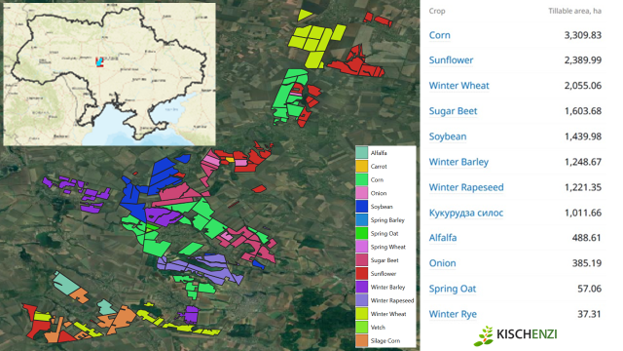
We expand this research now for other four crops in the Ukraine. Kischenzi Farms in Central Ukraine covers 15,000 hectares of land, engaging in arable, dairy, pig and vegetable farming. The parcel size ranges from 50-150 hectares and the parcels and crop area are listed in the figure below:
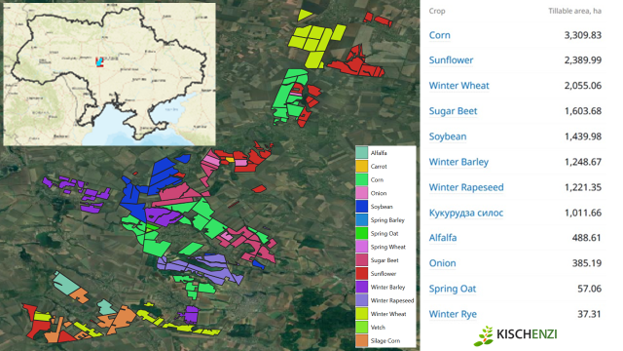
We focus on four crops to estimate biomass: corn, sugar beet, winter wheat and winter barley. The farmer is interestd to know the variation per parcel for Variable Rate Application (VRA) and anomalies.
Kischenzi Farms has information available on soil texure, terrain model and yield. Farm practices as ploughing, harrowing, sowing, applications of fertiliser and chemical products are known as well. The analysis will be done for two cropping seasons 2024-2025 and 2025-2026. Building an evolutionary model will be done by calibrating crop models on available farm information.
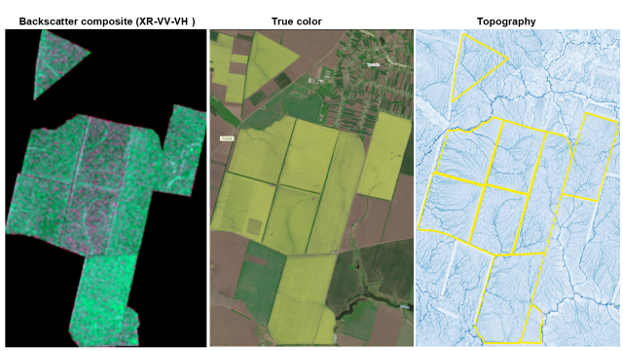
Field variation is visible from both optical and radar information. The figure below shows the variation in biomass of winter rape field of this season. The biomass clearly shows the topographical patterns in the parcel. And as well parcels that have different varieties for testing purposes.
Read more news about DINOSAR
DINOSAR and MINERVA join forces for satellite-based agricultural monitoring
DINOSAR, will build on research carried out as part of the MINERVA project, funded by the Netherlands and coordinated by TU Delft, which aims to establish a network that facilitates... View Article
[Gender & Agriculture] Voices of change: Women driving agricultural innovation in Colombia (2/2)
As digital technologies continue to reshape agriculture, women professionals are playing an increasingly important role in bridging innovation with the realities of the field. In Colombia’s sugarcane sector, remote sensing,... View Article
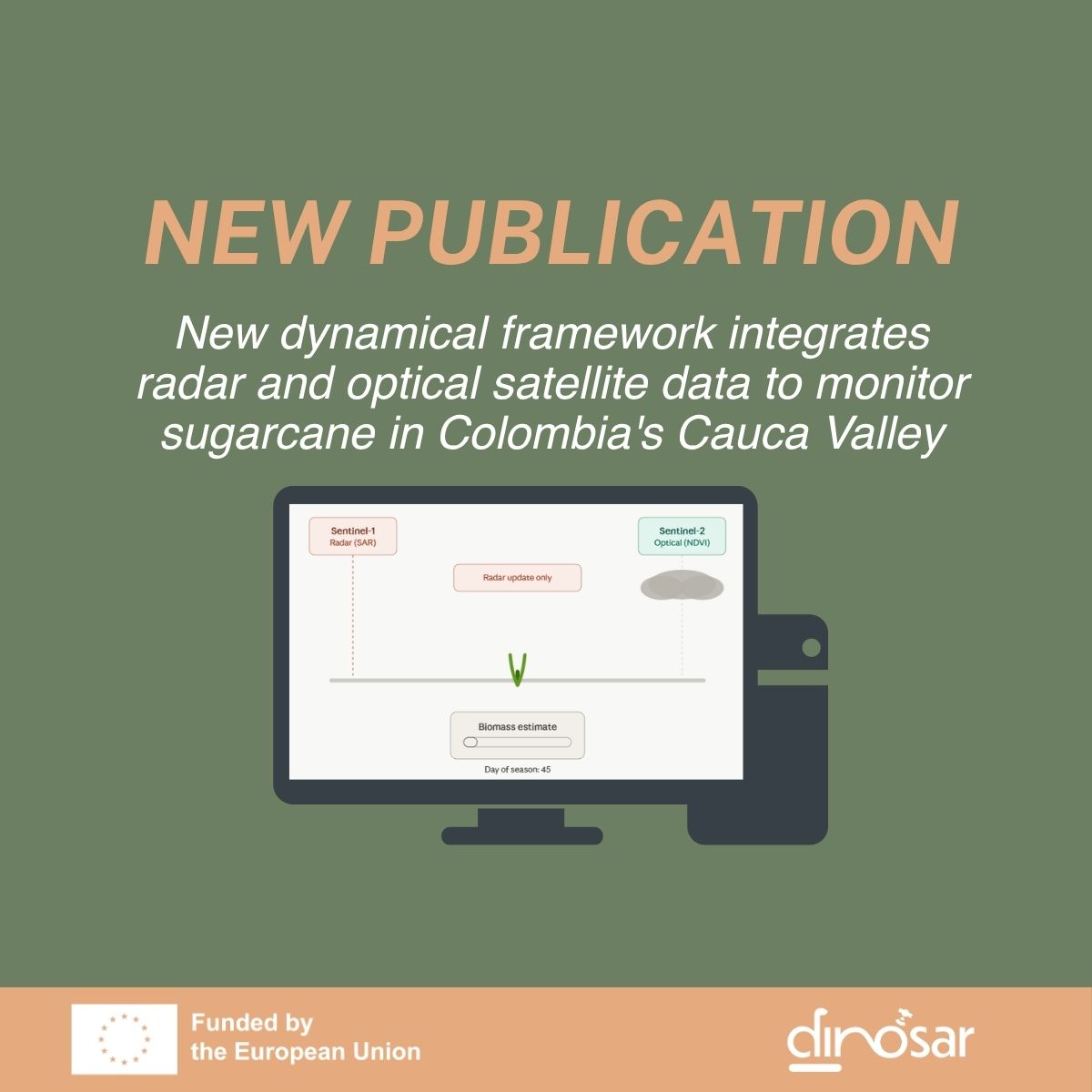
New dynamical framework integrates radar and optical satellite data to monitor sugarcane in Colombia’s Cauca Valley
DINOSAR is proud to announce the publication of its first scientific paper, led by the University of Alicante, with support from eLEAF, SarVision, and AgroAp. Published in the IEEE Journal... View Article