
News
[Gender & Agriculture] Voices of change: Women driving agricultural innovation in Colombia (1/2)
Gender gaps in agriculture: Colombian context and emerging voices
Building on the discussion of gender as a critical yet often overlooked dimension of agricultural sustainability, recent data highlights a persistent and structural gender gap across Colombia’s agro-pastoral sector and sugar cane industry.
At the national level, women represent 41.4% of the employed population, but only 17% of the agro-pastoral workforce (DANE-GEIH 2024). Employment is largely concentrated in vulnerable categories such as own-account workers (56.3%) and unpaid workers (28%), reflecting widespread informality in rural labor structures. This inequality is also reflected in income levels: in 2024, women in agriculture earned an average of COP 846,000 per month, around 16% less than men (COP 1,000,000).
In the sugar cane cluster of the Cauca River Valley, one of the most industrialized agricultural regions in Latin America, gender disparities remain particularly visible. According to the 2024–2025 Annual Report of Asocaña, the sector generates 286,000 direct and indirect jobs across six departments. Yet women remain significantly underrepresented. At Incauca, the only mill publishing gender-disaggregated data, women accounted for just 5.4% of direct employees in 2023. While female representation is slowly increasing in managerial and sustainability-related roles, overall participation remains limited.
These structural inequalities provide the context for the following testimonies, which offer a more grounded perspective on how gender dynamics are experienced within the sector. DINOSAR is delighted to give a voice to 3 inspiring women working in the sugarcane industry in the Cauca Valley.
From satellite data to field decisions: A woman’s perspective on precision agriculture
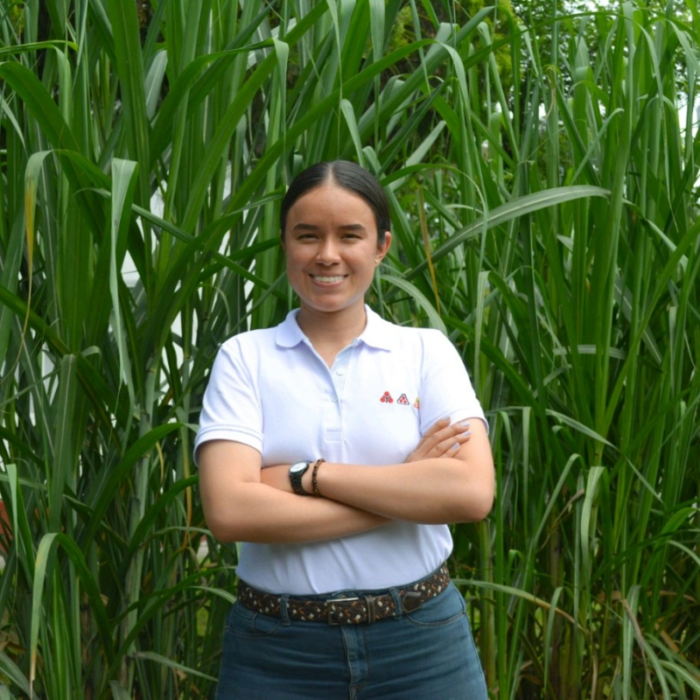
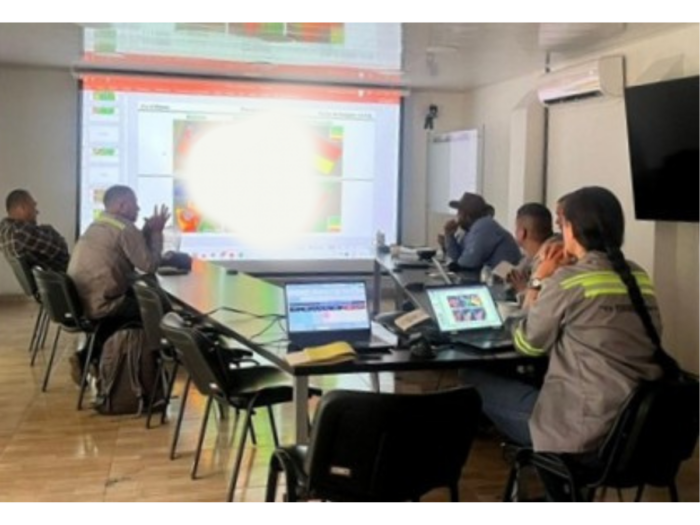
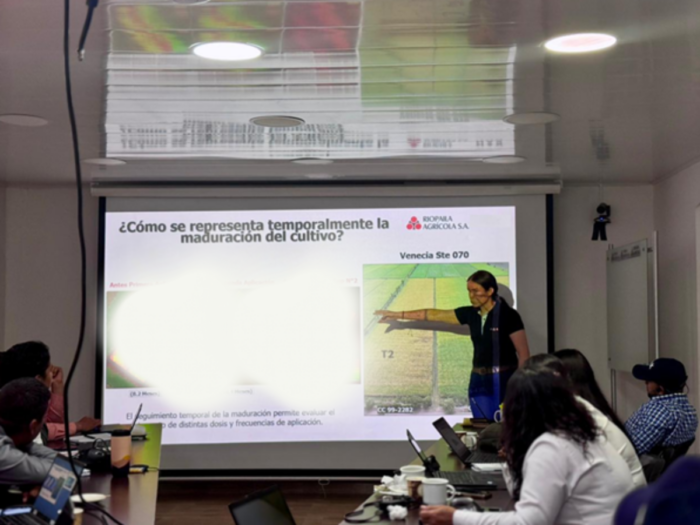
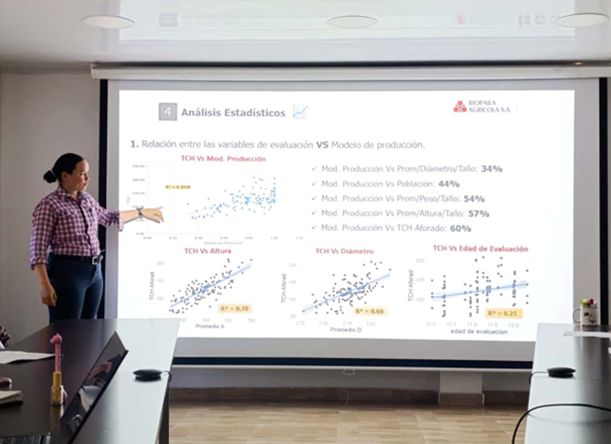
María Camila Valencia works in precision agriculture and GIS, turning satellite, agronomic, and climate data into actionable insights. Her work includes monitoring crop indicators, analyzing yields, mapping soil variability, and supporting decision-making through technical reporting. María Camila is working at Riopaila Agrícola S.A., a major sugarcane producer in Colombia’s Valle del Cauca region. The company operates an integrated model that combines large-scale agricultural production with sustainability and technological innovation.
How can women professionals contribute to the effective use and advancement of these tools within the sector?
We women bring perspectives and ways of working to the sector that enrich both the technical side and the organisational culture. In my experience, many female professionals I know take a particularly rigorous approach to validating data, challenging hypotheses and developing clear technical narratives for diverse audiences. This ability to translate complex information into actionable decisions is central to the advancement of remote sensing, because the tools only generate value when someone knows how to interpret and communicate them in the language of the field.
Furthermore, we help to build teams that are more diverse in terms of perspectives; we integrate concerns regarding sustainability, equitable access to technology, and the training of new generations of agricultural professionals. When a woman takes on technical roles in precision agriculture, she not only conducts analyses but also paves the way for others to envisage themselves in these roles.
What skills do you consider most important for working with remote sensing applied to agriculture?
I believe there are three complementary skill sets. The first is technical: an understanding of the physical principles behind sensors (optical, infrared and radar), proficiency in GIS platforms such as QGIS and ArcGIS, programming with tools like Python to automate analyses and process large volumes of data, and a solid grasp of statistics to validate results.
The second is agronomic: understanding crop physiology, soil dynamics, water management and the factors that explain spatial variability. Without this knowledge, vegetation indices remain mere numbers, lacking clear biological meaning.
The third, and often underestimated, aspect is communication: knowing how to translate complex results into clear, honest and useful messages for diverse audiences, from the field worker to company management. A cross-cutting skill that encompasses all three is curiosity: asking the right questions of the data, maintaining a critical attitude towards easy conclusions, and being willing to keep up to date. Agricultural remote sensing is a constantly evolving field, and growing with it is part of the job.
What aspect of your work are you most proud of?
What I am most proud of is having supported a process of cultural transformation within my field team, moving from a traditional culture, where people only trust what they can see with their own eyes, to one in which digital remote-sensing tools are accepted and valued as allies in crop monitoring and diagnosis.
When I first started working with satellite data, there was a natural barrier to adopting the technology. It was understandable; the field has always been characterised by practical knowledge, a trained eye, and experience gained from years of walking the fields. Suggesting that an index derived from a sensor could contribute to that assessment of the crop was not an easy idea to get across. Today, however, I see a team that believes in these tools, that asks questions, that investigates, that surveys their fields to decide where to go, where to focus first, and where they can be most efficient. Site-specific agriculture has ceased to be an abstract technical concept and has become a concrete way of working.
Women driving innovation in the sugarcane industry
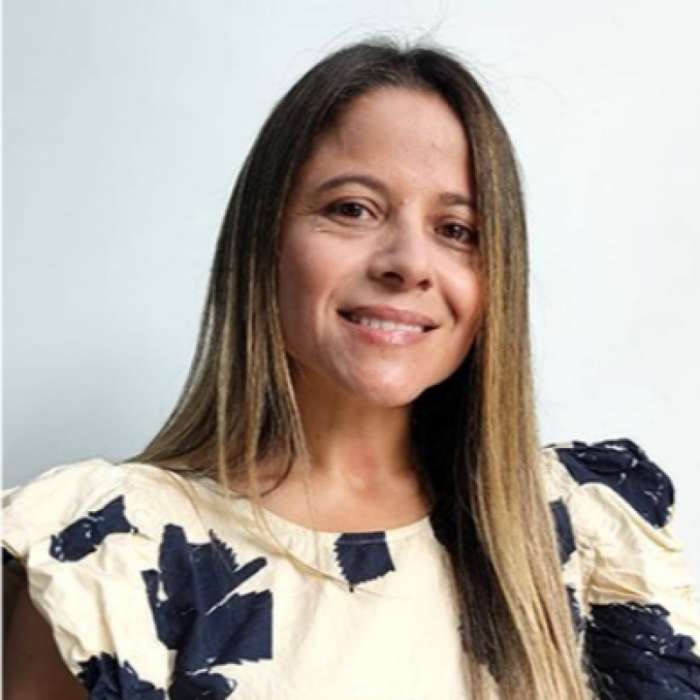
Paula Marcela Valencia Ramírez, Director of Quality for Agricultural Operations at Ingenio Providencia, shares her vision of the future of agriculture and the growing impact of remote sensing technologies in the sugarcane sector. Through advanced analytics, predictive models, and Agriculture 4.0 tools, she explains how digital transformation is enabling a shift toward more proactive and data-driven farming.
She also reflects on the evolving role of women in agribusiness, highlighting the importance of equity, visibility, and leadership opportunities in strategic positions. Finally, she encourages young women to embrace technology, continuous learning, and innovation as key drivers for the future of agriculture.
Bridging sustainability and agricultural innovation
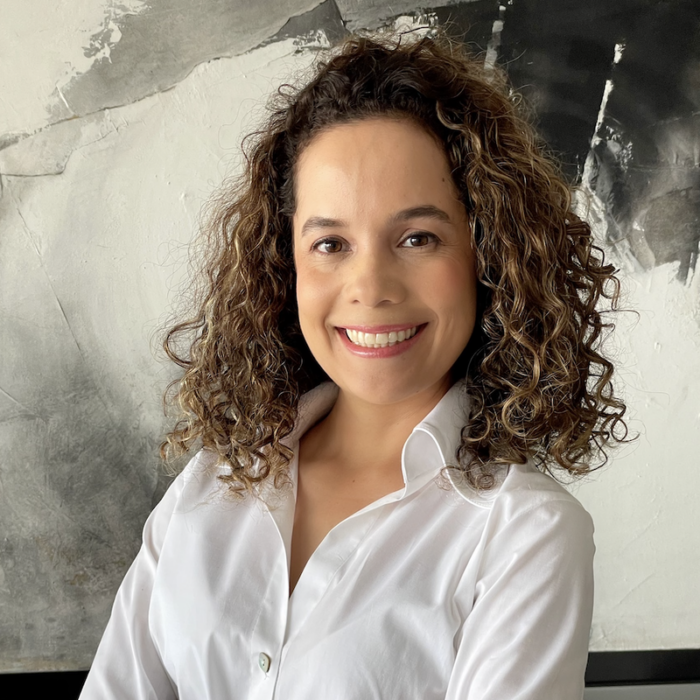
Juliana María Padilla, CEO and Founder of the Refora – Soluciones Ambientales company.
¿Podría presentar brevemente su organización y explicar cuál es su función dentro de ella?
In Valle del Cauca, many farms linked to sugar mills have transitioned from family-run operations to small and medium-sized agro-industrial enterprises. This shift brings with it greater demands in terms of productivity, technical management and environmental compliance, which in many cases creates gaps that affect their competitiveness and sustainability.
Refora was established to bridge that gap. It began as an environmental solutions company that supports farmers and organisations in the sector with the implementation of sustainable practices and regulatory compliance. We offer comprehensive services including environmental procedures and permits, audits, certifications, landscaping and specialist technical advice on the cultivation of sugar cane.
My role as founder allows me to lead the strategic direction and provide technical support to farmers, whilst continuing to engage with people in the sector, which enables me to link sustainability and promote a more structured approach to management in the agricultural sector.
How do you view the potential for adopting remote sensing technologies in the sugarcane sector?
Remote sensing offers significant potential in the agro-industrial sector, particularly in crop monitoring, water resource management and data-driven decision-making. Although its adoption has been growing, there is still a gap in its comprehensive implementation. The challenge lies in translating this data into concrete actions in the field that lead to increased production and sustaining these gains over time.
What has your experience been like as a woman working in agricultural technology?
It has been a wonderful experience for me, one that I value highly, because it has allowed me to develop and I continue to grow professionally. I believe that, at present, the agri-industry has consistently and progressively managed to overcome gender differences to a large extent. Whilst we women have earned a place through our skills, knowledge, talent, professional training and management abilities, there is still some way to go before we have more representation in executive and managerial roles.
Read more news about DINOSAR
[Gender & Agriculture] An essential yet overlooked dimension of sustainability
Looking beyond environmental sustainability When discussing the sustainability of agriculture, the focus is often placed on environmental challenges: soil health, biodiversity, climate resilience or water management. Yet, the sustainability of... View Article
DINOSAR at the 17th International Conference on Precision Agriculture and 11th Brazilian Congress on Precision and Digital Agriculture
The DINOSAR project will be presented at the upcoming 17th International Conference on Precision Agriculture (ICPA) and the 11th Brazilian Congress on Precision and Digital Agriculture (ConBAP), a major international... View Article
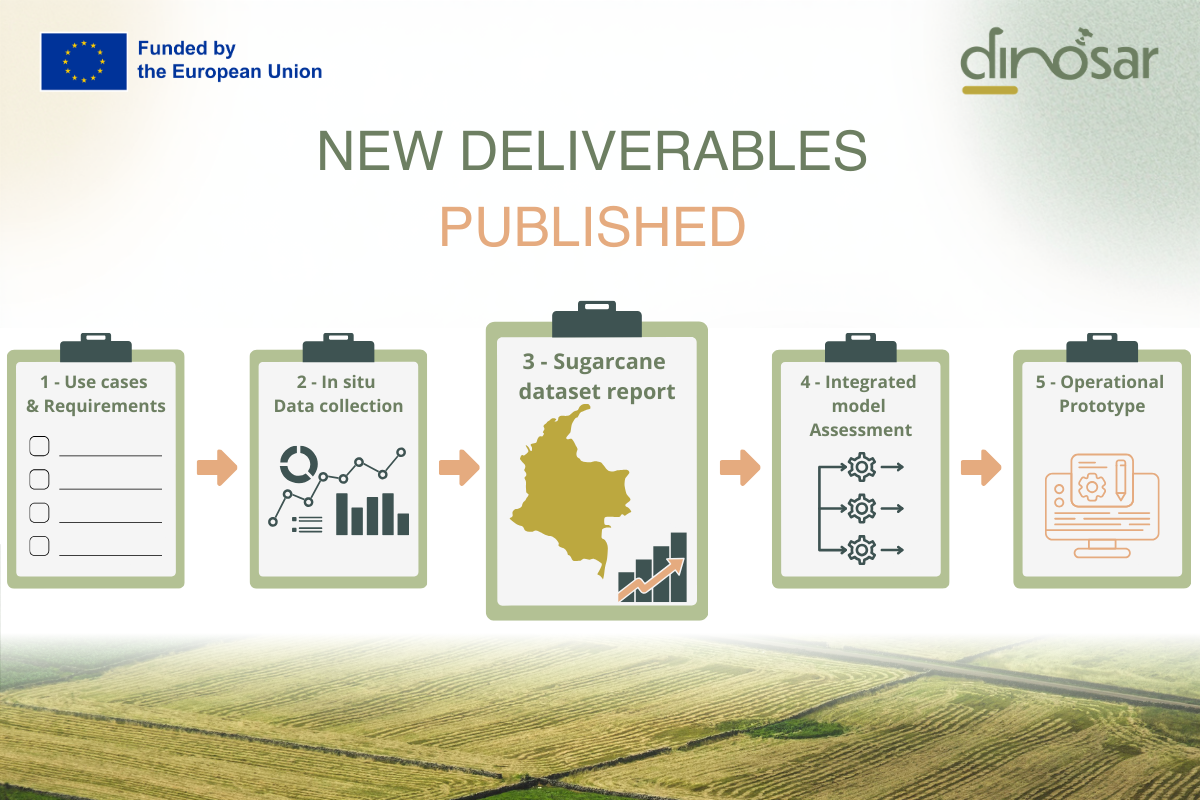
DINOSAR publishes 6 new deliverables
The DINOSAR project is pleased to announce the publication of six new deliverables, marking significant progress in user-driven service design, in-situ data collection, and integrated model development for sugarcane monitoring... View Article